You have one chance to ask them. Don't waste it.
Choose the exact questions that unlock the stories nobody else thought to ask. Ten minutes tonight. A film that lasts forever.
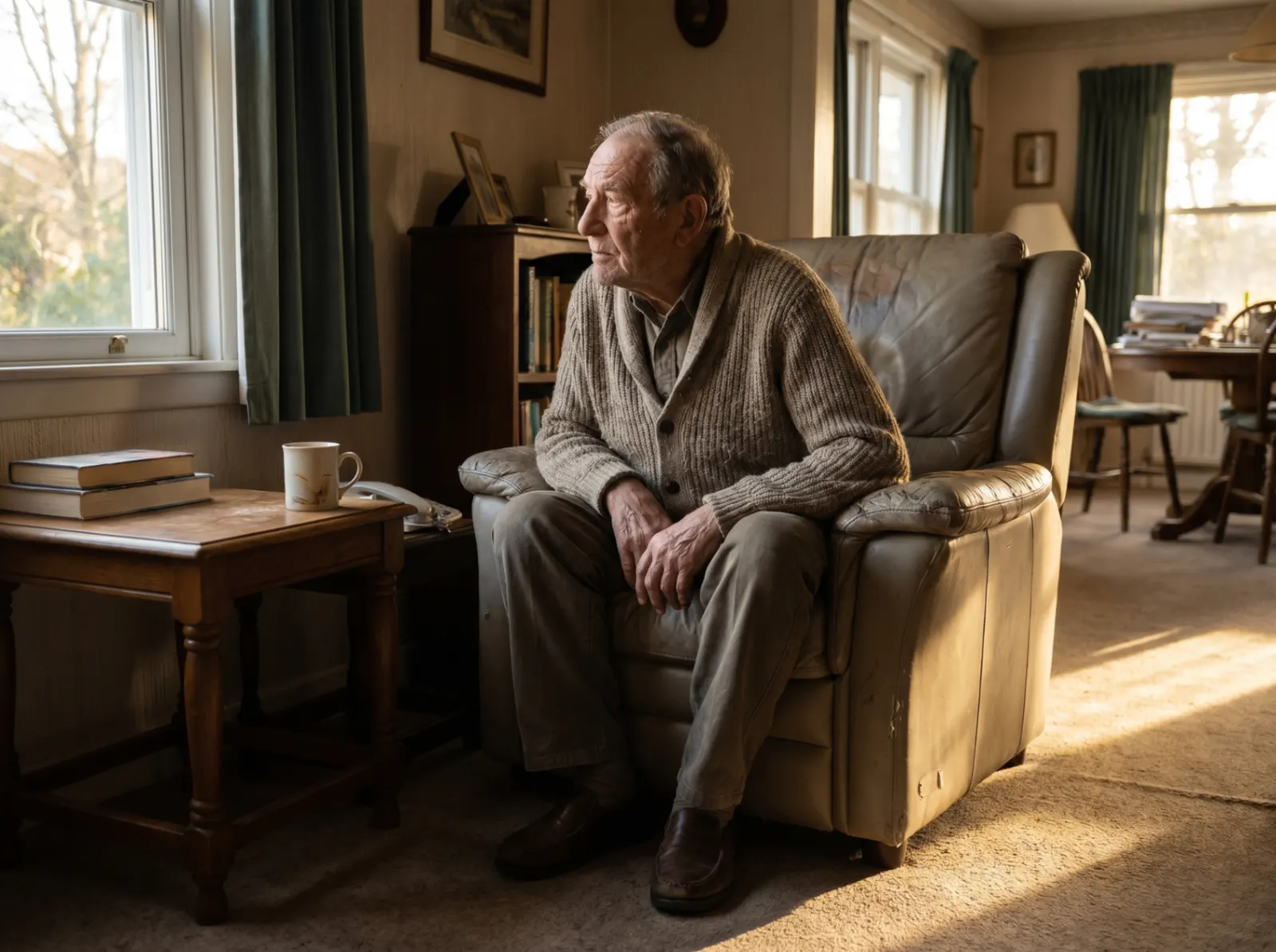
Here is what nobody tells you about family stories.
They don't disappear when someone dies.
They disappear the Tuesday before. When you were too busy to call. When you meant to visit. When you thought next time — and then there wasn't one.
The stories are still in there right now. Every single one. The things they survived. The moments they've never told anyone — because nobody ever asked the right question.
You are the right person. This is the right moment.
The questions you choose tonight are the difference between a conversation that skims the surface — and one that goes somewhere neither of you expected.
Who's leading the session?
Every family is different. Pick what fits yours.
A parent leads. The grandchild sits beside them.
Young children ask the questions nobody else dares — because they don't know they're not supposed to. Their instinct is perfect.
But they'll need a parent or older family member to hold the question sheet, manage the pace, and gently guide things if the conversation gets emotional or loses its thread.
The grandchild's job is simply to be there — to react, to giggle, to say really? That's enough. That's more than enough.
They can lead — with one adult on standby.
Teenagers are often the most surprising interviewers. They're old enough to hold a real conversation, young enough that the grandparent still sees them as the little one who needs looking after — which makes the grandparent open up in a completely different way.
Let them choose the questions themselves. Brief them on the three rules: don't rush, don't fill silences, don't worry if things get emotional.
Have a parent nearby but out of frame. Not hovering — just available.
You're ready. Trust yourself.
You already know how to have a real conversation. You just need the right questions and permission to go deeper than you normally would.
The only thing that goes wrong with adult-led sessions is moving too fast. Resist the urge to fill every pause. The best answers come after three seconds of silence that feels uncomfortable.
Sit close. Make eye contact. Put your phone face-down except when you glance at the question sheet. They'll remember that you listened.
Tell us about them.
Answer a few questions about their life and we'll suggest the ones that will matter most. This takes about three minutes. They see none of it.
The more honestly you answer, the better the questions we suggest.
We've spent years building a library of questions that open people up. You'll never see all of them. You don't need to. We'll find the ones that are right for them.
The thinking behind the questions.
Every Heirloom question is informed by reminiscence therapy — the body of research that began with Dr Robert Butler's 1963 paper The Life Review: An Interpretation of Reminiscence in the Aged, and has been studied and refined for over sixty years since.
Two findings shape how we write questions. First: specific questions outperform general ones — "what did your mother's hands look like?" unlocks more than "tell me about your childhood." Second: the questions that produce the most are the ones that invite a person to make meaning of their life, not just list its events. That's why our questions tend to ask not only what happened, but what it meant, what it cost, and what they'd want remembered.
We're not therapists, and a Heirloom session isn't therapy. But the same research that helps people find peace in looking back is the research that helps us write questions worth answering.
When were they born, roughly?
Library of 49+ questions · we'll surface the right ones for them
Print your question sheet.
Read through it alone tonight. Practise asking each question out loud — not to anyone, just to yourself. Hear how it sounds. Adjust how you'd phrase it naturally. Tomorrow it'll feel like a conversation, not a script.
No questions selected yet. Choose 6–10 from the suggestions above.
Set the scene.
No equipment needed. Everything on this list is already in your home.
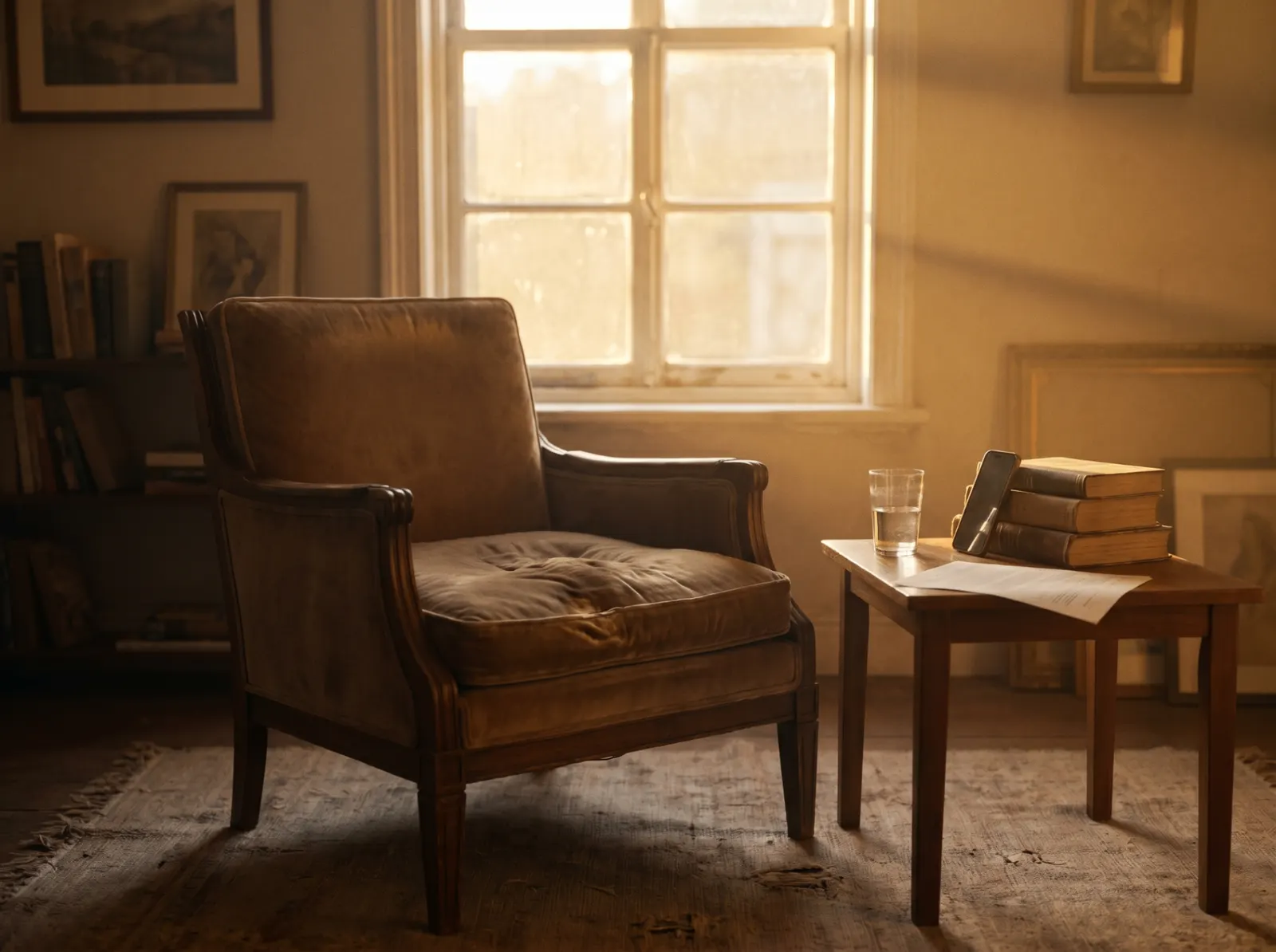
0/8 ready
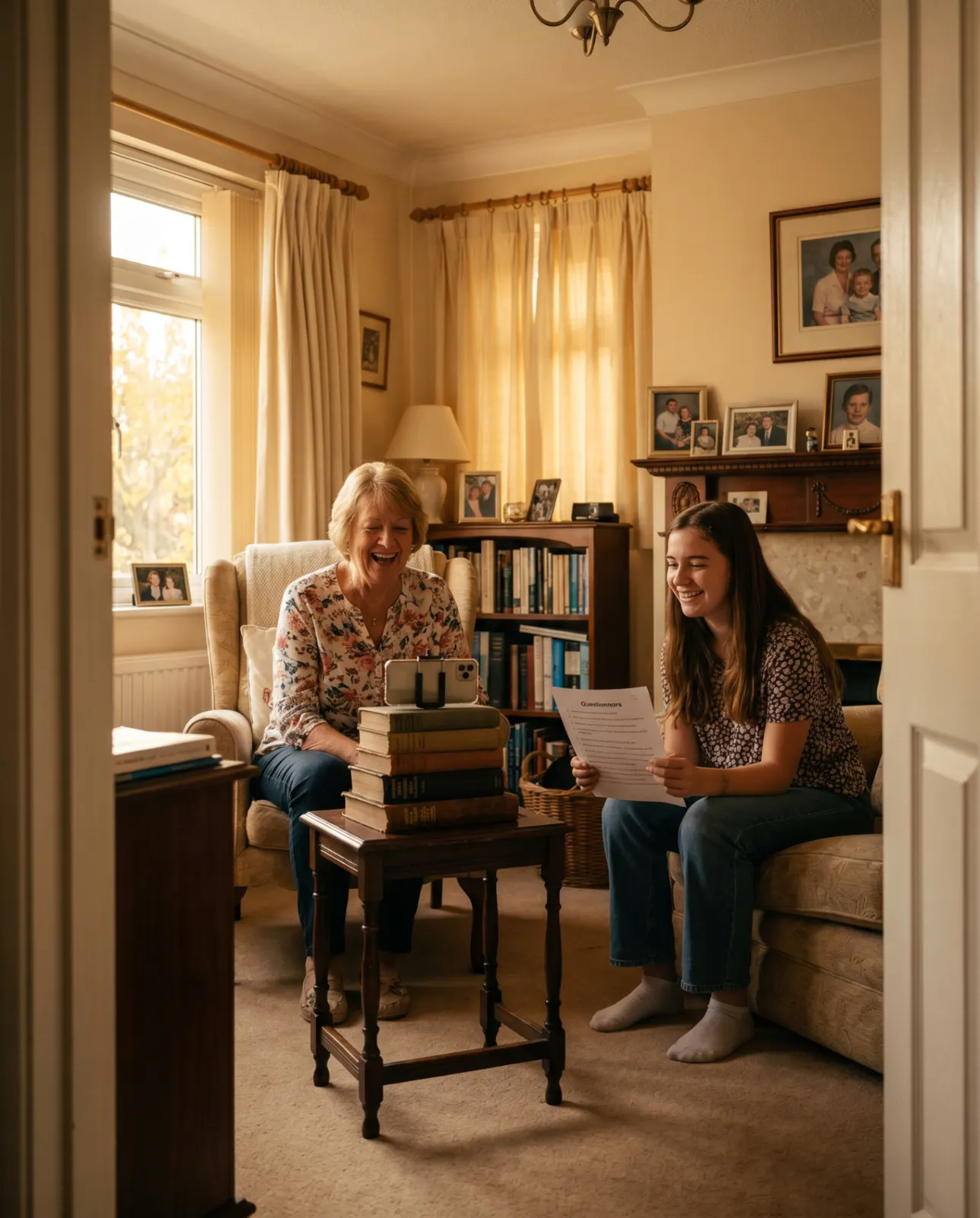
She passed in November. We made her film in August. I don't have words for what that means to us now.
James didn't plan it. His daughter suggested it. They spent an evening choosing the questions — twelve of them — and the next morning sat his father down by the living room window.
His dad talked for twenty-three minutes. He talked about things James had never heard. A girl from before his mother. A mistake at nineteen he'd never forgiven himself for. The moment he realised he was going to be alright.
Three months later, James's father passed.
The film is four minutes and eleven seconds long. James's family has watched it sixty-seven times.
Don't wait for August. Book your session today.
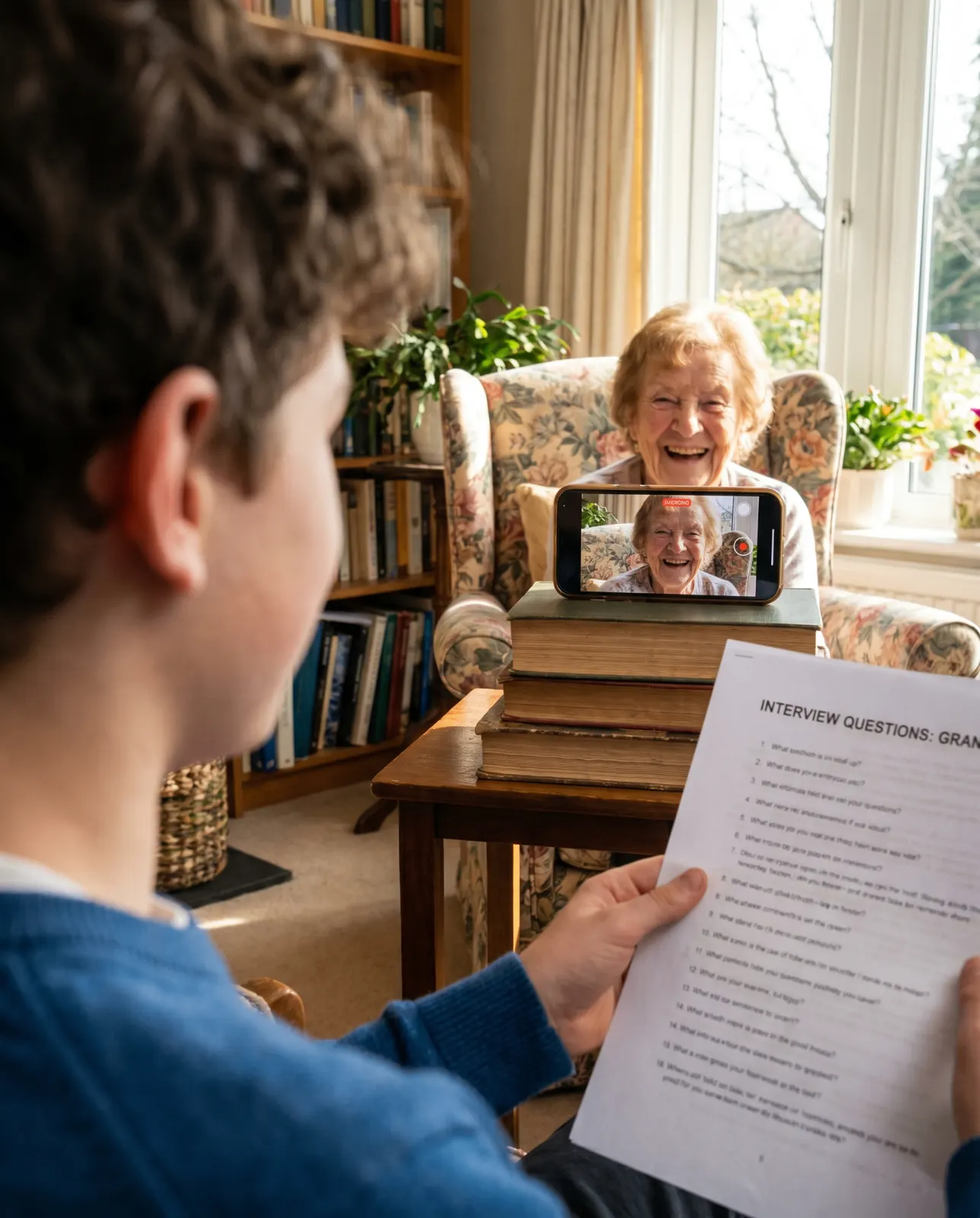
She told my daughter things she'd never told me. My own mother. In twenty minutes.
Sarah was twelve when we booked the session. I thought she might be too young. I was wrong.
She chose the questions herself — picked the ones she actually wanted to know, not the ones she thought she was supposed to ask. She practiced them alone in her room the night before.
The next morning, something happened at that kitchen table that I can only describe as: my mother finally being seen.
She talked about falling in love. About being frightened. About the version of her life she sometimes wonders about. My daughter sat across from her and just listened — in that way that children do, without agenda, without impatience.
I sat in the next room and heard things about my own mother I had never known.
Your family has one of these sessions waiting to happen. Let us help you prepare for it.
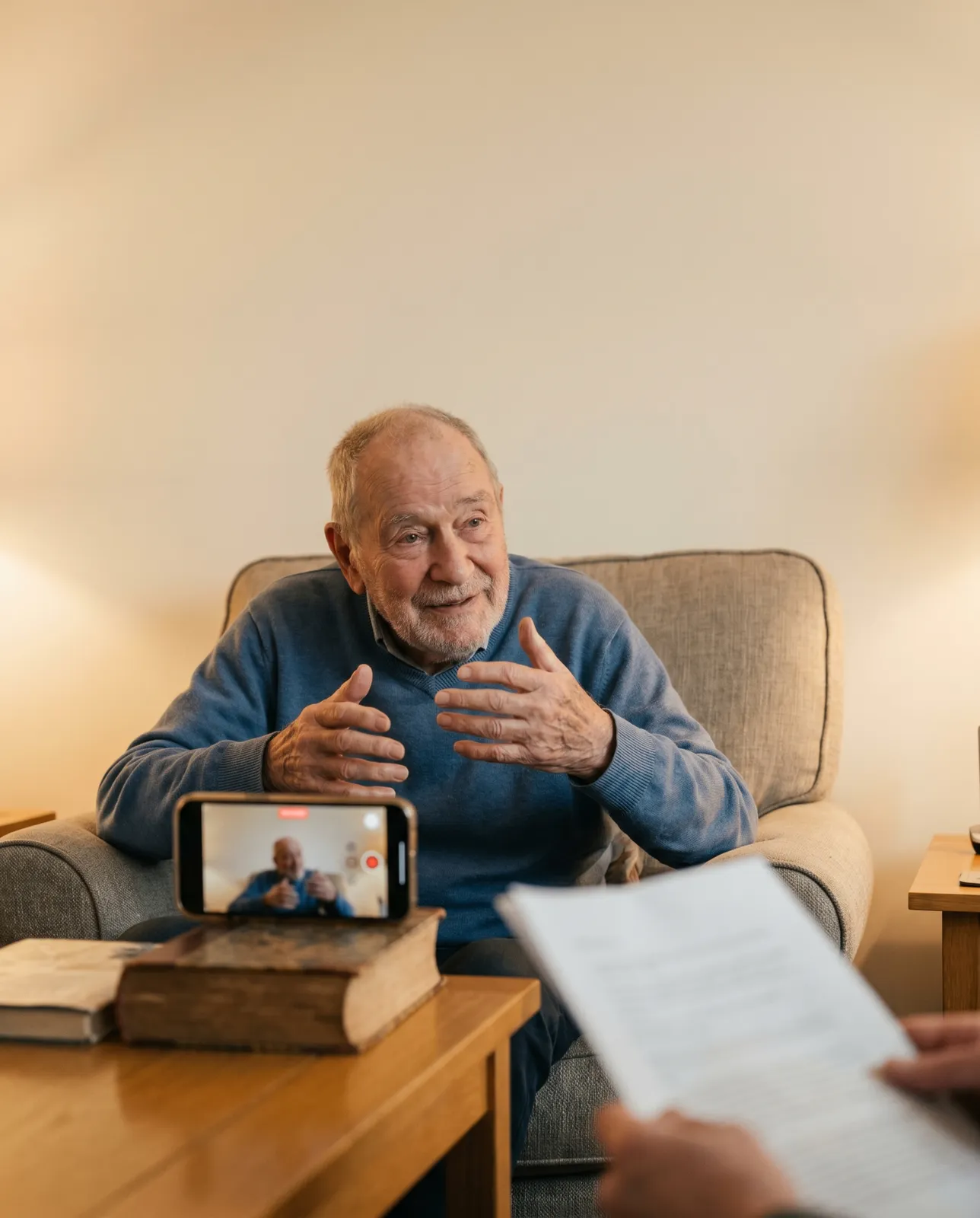
The question she'd been waiting eighty-three years for someone to ask.
The last question on the sheet said: Is there anything you've always wanted to say — that nobody's ever thought to ask?
She was quiet for eleven seconds.
Then she said: I want you to know I was frightened most of the time. I just didn't think you'd want to know that. I thought you needed me to be strong.
Her granddaughter — twenty-two years old — reached across and held her hand.
Neither of them said anything for a while.
That moment is in the film. It always will be.
The question is already written. Someone just needs to ask it.
Tonight. Not next month.
The session you're putting off is the one you'll think about for the rest of your life — either because you did it, or because you didn't.
Ten minutes tonight. Choose the questions. Print the sheet. Read them out loud to yourself.
Tomorrow, give someone you love the most important twenty minutes of their life.
Choose my questions now →Every session comes with personal guidance from your story producer. You are not doing this alone.